Note: The creation of this article on testing Target Size (Enhanced) was human-based, with the assistance of artificial intelligence.
Explanation of the success criteria
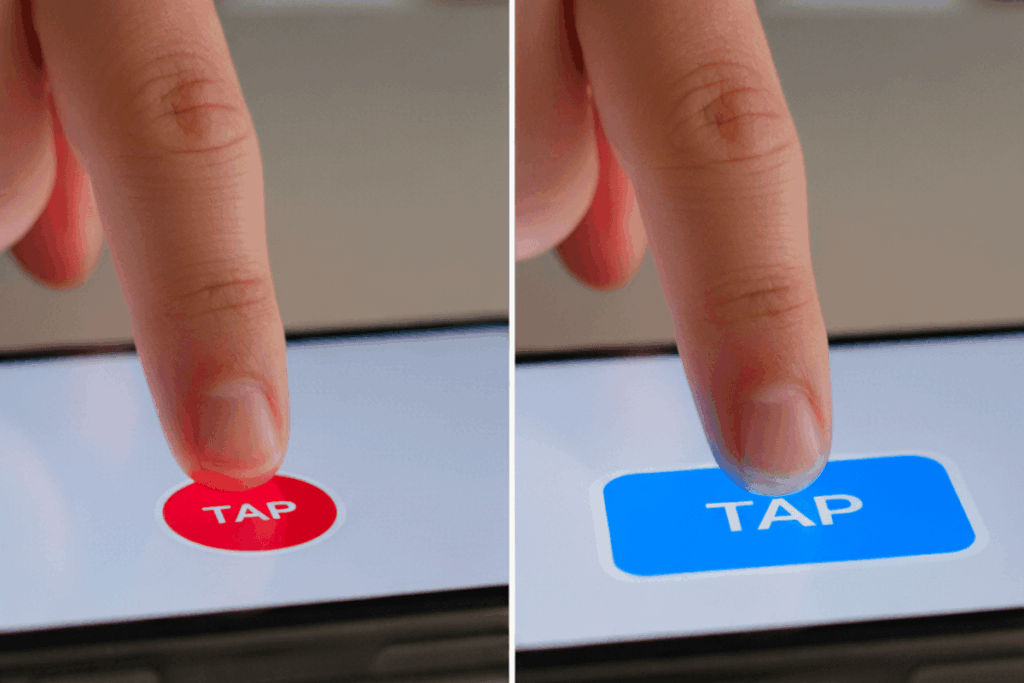
WCAG 2.5.5 Target Size (Enhanced) is a Level AAA conformance level Success Criterion. It sets a high standard for inclusive design by ensuring that all interactive elements are sufficiently large for easy activation. Unlike the baseline target size requirement, this enhanced criterion specifies minimum dimensions for both width and height of interactive controls, including buttons, links, and form fields, reducing the risk of accidental activation. This is more than a technical specification; it is a deliberate design philosophy that prioritizes usability and accessibility across the full spectrum of physical abilities. By enforcing generous target sizes, designers and developers create interfaces that are not only functional but genuinely welcoming, enabling seamless interaction for users across devices, whether on touchscreens, desktops, or assistive technologies.
Although Level AAA is considered aspirational rather than mandatory, pursuing compliance with 2.5.5 Target Size (Enhanced) sends a strong message: accessibility is more than a checkbox, it’s a strategic commitment to inclusivity. Organizations embracing this standard demonstrate leadership in creating digital experiences that are equitable, usable, and human-centered.
Who does this benefit?
- Users with limited dexterity: Those who have difficulty making precise movements due to conditions like arthritis, tremors, or motor impairments.
- Touchscreen users: Individuals interacting with small screens, where small targets can be difficult to tap accurately.
- Users of assistive devices: People relying on styluses, adaptive pointers, or switch devices who need larger targets to interact effectively.
- Older adults: Users who may have reduced fine motor control or coordination.
- Anyone with temporary physical limitations: Such as injuries or fatigue that affect hand control.
Essentially, it ensures that all users can interact with web content safely and efficiently, reducing errors and frustration.
Testing via Automated testing
Automated testing excels at rapidly scanning large websites or applications to identify elements that do not meet minimum width and height requirements. It provides consistency and efficiency at scale, but it cannot fully interpret context, such as whether closely spaced targets or dynamic layouts create interaction challenges across devices.
Testing via Artificial Intelligence (AI)
AI-based testing builds on automation by simulating human interaction and visual perception, offering deeper insights into how target sizes function in realistic scenarios. While more sophisticated, AI testing may occasionally misinterpret complex layouts or unconventional controls, leading to false positives or negatives.
Testing via Manual Testing
Manual testing, meanwhile, remains the gold standard for understanding real-world user experiences. By physically interacting with targets across devices, evaluators can assess spacing, precision, and usability, particularly for users with limited dexterity. Its limitations are obvious: it is time-intensive, less scalable, and subject to human variability.
Which approach is best?
Relying on a single testing method is never sufficient to ensure full WCAG 2.5.5 Target Size (Enhanced) compliance. The most effective strategy for achieving WCAG 2.5.5 Target Size (Enhanced) compliance is a hybrid approach that combines automated, AI-based, and manual testing.
Automated testing serves as the foundation, rapidly scanning entire websites or applications to identify interactive elements that fail to meet minimum width and height specifications. This method excels at providing a broad, repeatable assessment at scale, flagging obvious non-compliant buttons, links, and form fields across multiple pages in moments.
AI-based testing adds transformative value. By simulating human behavior and visual perception, AI can identify targets that, while technically compliant in size, are practically challenging to use in context. It evaluates spacing, touch precision, and interactive density, highlighting areas where users with limited dexterity, those on small touchscreens, or assistive device users may struggle. AI testing bridges the gap between raw data and human experience, offering actionable insights that go beyond binary pass/fail results.
Manual testing completes the hybrid approach, providing the most reliable, real-world validation of Target Size (Enhanced) compliance. Evaluators interact directly with elements across devices, mimicking the experiences of users with motor impairments, aging hands, or temporary physical limitations. This hands-on perspective captures subtle usability issues, such as awkward target placement, inconsistent spacing, or overlapping controls, that automation and AI may miss.
The power of a hybrid approach lies in its integration: automated testing rapidly identifies structural deficiencies, AI-based testing evaluates practical usability in context, and manual testing validates the real-world experience of diverse users. When combined, these methods create a rigorous, comprehensive testing strategy that ensures interactive elements are not only compliant on paper but genuinely usable by all. For organizations striving to meet Level AAA standards, this hybrid methodology is not just best practice, it is a commitment to creating digital experiences that are equitable, precise, and thoughtfully designed for every user.