Note: The creation of this article on testing Accessible Authentication (Enhanced) was human-based, with the assistance on artificial intelligence.
Explanation of the success criteria
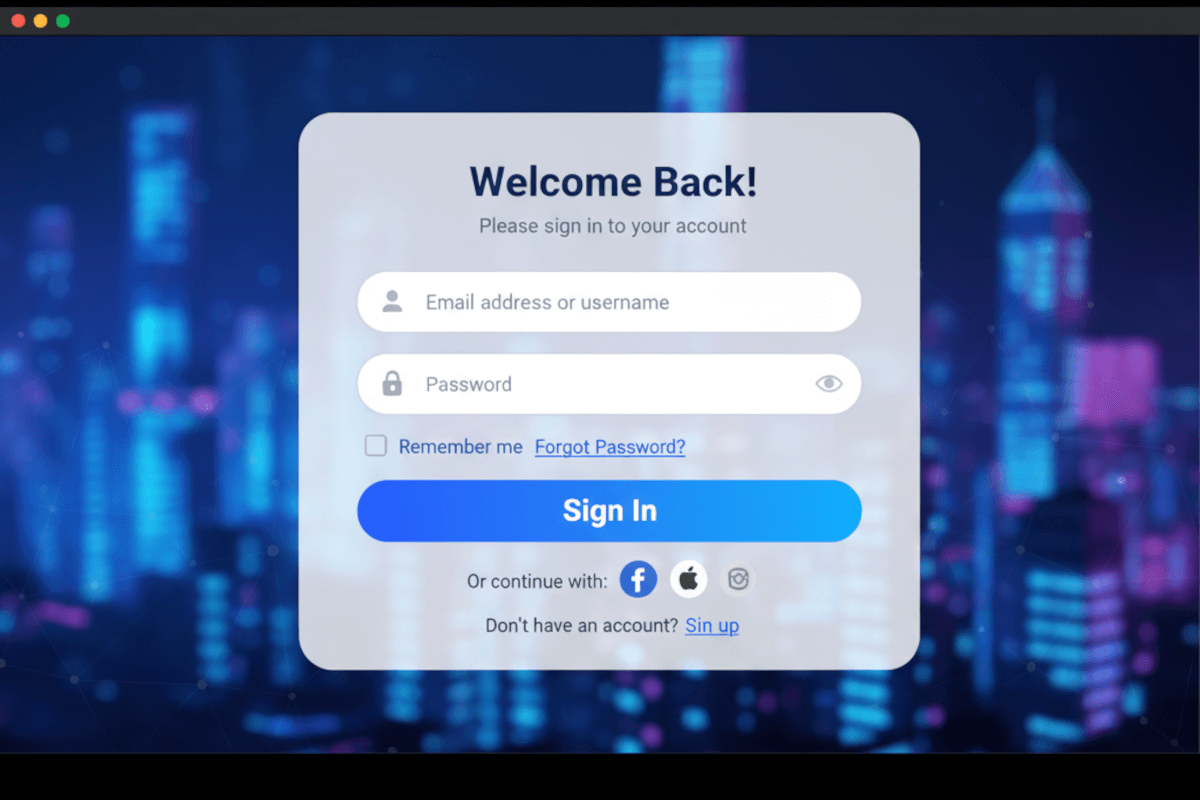
WCAG 3.3.9 Accessible Authentication (Enhanced) is a Level AAA conformance level Success Criterion. Unlike basic authentication, this criterion emphasizes alternatives that reduce reliance on memory, dexterity, or complex visual cues, such as offering passphrase options, biometric alternatives, or one-time codes accessible via multiple channels. It also requires clear, actionable instructions and error feedback to guide users through authentication seamlessly.
By prioritizing accessibility without compromising security, 3.3.9 challenges organizations to rethink traditional login flows, creating experiences that are frictionless, trustworthy, and genuinely inclusive. For digital leaders, this is a call to innovate authentication design as a cornerstone of both usability and compliance.
Who does this benefit?
- Users with cognitive disabilities gain authentication options that don’t rely on memory-heavy passwords or complex sequences.
- Users with motor impairments benefit from alternatives that reduce dexterity demands, like biometric or simplified input methods.
- Users with visual or sensory impairments access authentication flows designed for screen readers, magnification, or alternative feedback channels.
- Security teams ensure accessibility enhancements do not compromise secure authentication, balancing protection with inclusivity.
- UX and product designers receive actionable insights to create authentication experiences that are intuitive, inclusive, and legally compliant.
Testing via Automated testing
Automated testing excels at rapidly scanning for common technical barriers, such as missing ARIA attributes, improper focus handling, or inaccessible error messages, providing quick coverage across large systems. However, it falls short in assessing real-world usability, nuanced cognitive load, or alternative authentication methods that may require human judgment.
Testing via Artificial Intelligence (AI)
AI-based testing adds a layer of intelligent simulation, predicting potential accessibility challenges and identifying non-obvious patterns, such as whether instructions or error messages are comprehensible to diverse user groups. Its limitation lies in interpretive accuracy, AI may misjudge context, fail to replicate real human interaction, or overgeneralize solutions.
Testing via Manual testing
Manual testing remains indispensable, as it allows trained evaluators and users with disabilities to authentically experience authentication flows, uncover cognitive, motor, or sensory hurdles, and validate the effectiveness of alternative methods. The downside is resource intensity: manual testing demands time, expertise, and coordination, particularly for varied authentication scenarios.
Which approach is best?
A robust hybrid approach to testing WCAG 3.3.9 Accessible Authentication (Enhanced) combines the speed of automated tools, the predictive intelligence of AI, and the nuanced insight of human evaluation to ensure authentication flows are both secure and genuinely inclusive.
Start with automated testing to rapidly detect technical barriers such as missing ARIA labels, improper focus order, or inaccessible error messages, providing a broad baseline of compliance across all login points and authentication mechanisms.
Layer in AI-based testing, which simulates diverse user behaviors, assesses cognitive load, evaluates clarity of instructions, and flags potential accessibility friction points that automated tools alone cannot catch, like ambiguous feedback or confusing multi-step authentication sequences.
Finally, integrate manual testing, involving both accessibility experts and users with varied disabilities, to experience authentication flows firsthand, validate alternative methods like passphrases, biometrics, or multi-channel one-time codes, and uncover subtle barriers impacting real-world usability. By iterating across these three methods, automated, AI-driven, and human-centered, organizations gain a comprehensive view that balances efficiency with authenticity, ensuring every authentication experience is secure, inclusive, and aligned with the forward-looking standards of WCAG 3.3.9.