Note: The creation of this article on testing Consistent Navigation was human-based, with the assistance on artificial intelligence.
Explanation of the success criteria
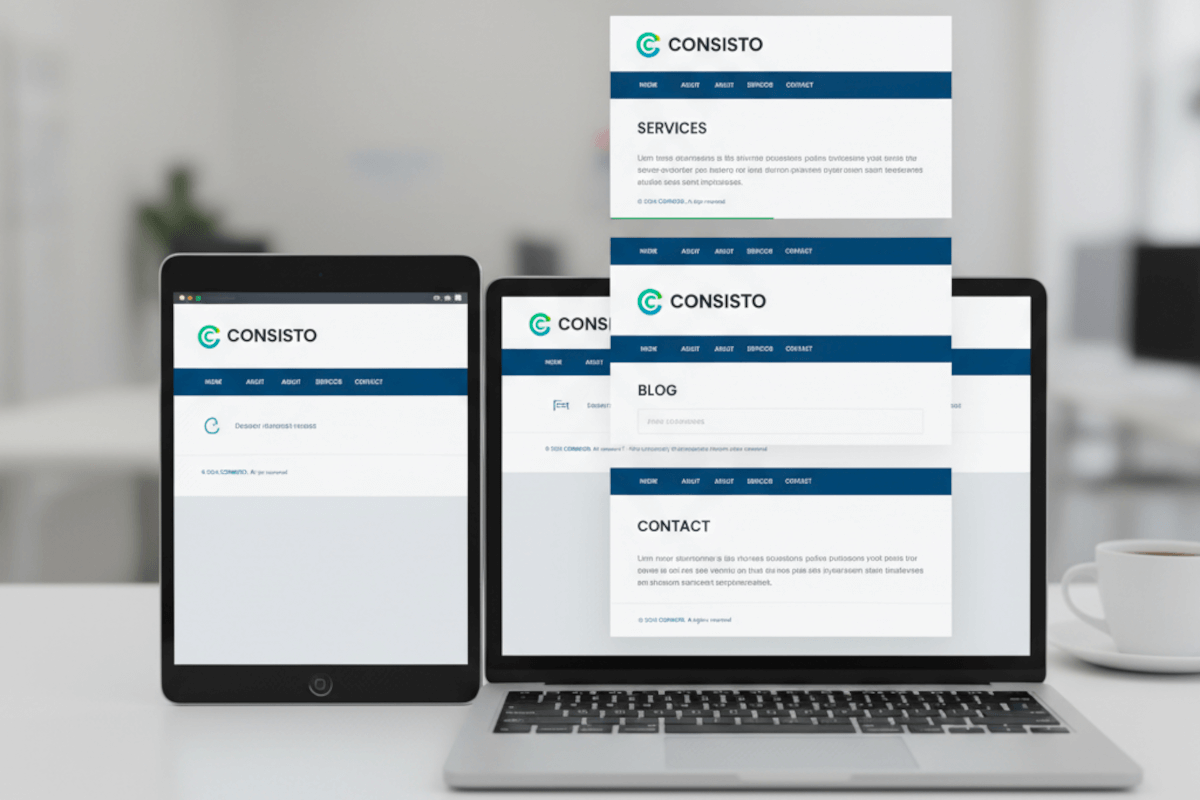
WCAG 3.2.3 Consistent Navigation is a Level AA conformance level Success Criterion. It emphasizes predictability and familiarity in digital experiences. It requires that repeated navigation mechanisms, such as menus, links, and toolbars, remain consistent across pages within a website or application. The goal is to reduce cognitive load and enhance user confidence, ensuring that users can reliably find information and complete tasks without having to relearn the interface on each page.
For organizations committed to inclusive design, achieving consistent navigation means not only replicating visual and functional elements but also maintaining consistent ordering, labeling, and interaction patterns. This principle empowers all users, including those relying on assistive technologies, to navigate efficiently and independently, ultimately fostering a more seamless, intuitive digital experience.
Who does this benefit?
Testing WCAG 3.2.3 Consistent Navigation delivers tangible benefits by ensuring that users can move through digital experiences confidently, efficiently, and independently:
- Users with cognitive disabilities: Testing ensures navigation patterns are predictable and uniform, reducing cognitive load, preventing confusion, and helping users focus on content rather than interface quirks.
- Keyboard and assistive technology users: By verifying that menus, links, and controls appear in consistent order across pages, testing makes it easier for screen readers and keyboard users to navigate without unnecessary repetition or trial-and-error.
- Older adults: Testing reinforces familiar navigation structures, which supports memory retention, reduces frustration, and allows older users to complete tasks with greater confidence.
- Users with low digital literacy: Consistent navigation, validated through testing, makes sites intuitive and approachable, helping users quickly understand how to move through content and perform actions.
- All users seeking efficiency: Even without disabilities, users benefit from streamlined and predictable navigation, enabling faster task completion, lower error rates, and an overall more satisfying experience.
Testing via Automated testing
Automated testing excels at quickly scanning large volumes of pages to identify inconsistencies in structural elements, such as missing menus, misaligned links, or non-standard navigation widgets. It provides speed and breadth, but it cannot interpret context, user intent, or the subtle ways navigation inconsistencies impact real-world usability.
Testing via Artificial Intelligence (AI)
AI-based testing builds on this by analyzing patterns across pages, predicting where users might struggle, and flagging potential navigation conflicts that affect cognitive flow or accessibility. It can prioritize high-risk issues and offer data-driven recommendations, yet it still relies on models that may misinterpret nuanced design decisions or accessibility intent.
Testing via Manual testing
Manual testing, meanwhile, is indispensable for capturing the human experience, observing how users with disabilities, varying cognitive abilities, or assistive technologies actually navigate a site. While slower and more resource-intensive, manual evaluation uncovers practical issues that no automated tool or AI model can fully anticipate, such as confusion caused by subtle label changes, ordering shifts, or inconsistent interaction behaviors.
Which approach is best?
By integrating all three approaches, organizations can achieve a comprehensive, reliable assessment that balances efficiency, predictive insight, and real-world validation, ultimately ensuring navigation is truly consistent, usable, and inclusive for all users.
The process begins with automated testing, which rapidly scans the site to detect structural inconsistencies across menus, links, toolbars, and other repeated navigation elements. This stage efficiently identifies missing or misaligned navigation components, ensuring no obvious gaps are overlooked across large volumes of content.
Next, AI-based testing contextualizes these findings, analyzing navigation patterns to predict where users might encounter confusion or disruption. By evaluating the consistency of labeling, ordering, and interaction behavior, AI can prioritize high-risk inconsistencies and recommend potential refinements, providing insight that goes beyond what automated tools can detect.
Finally, manual testing validates the real-world experience, involving expert evaluators and users with assistive technologies to navigate the site under realistic conditions. This stage captures subtle usability issues, such as cognitive friction from minor label changes or unexpected interaction behaviors, that automated and AI approaches might miss.
By integrating these three methods, the hybrid approach ensures navigation is not only structurally consistent but also predictable, intuitive, and fully accessible, creating a seamless experience that empowers all users to move confidently and efficiently through digital content.